Eco Flare: What is Azimuth?

Understanding Azimuth is crucial to our ability to manage vegetation and stop wildfires. Azimuth is simply the angle, expressed in degrees ranging from 0° to 360°, between a fixed point (often true north) and the direction you are observing. It indicates the direction that an object is facing.
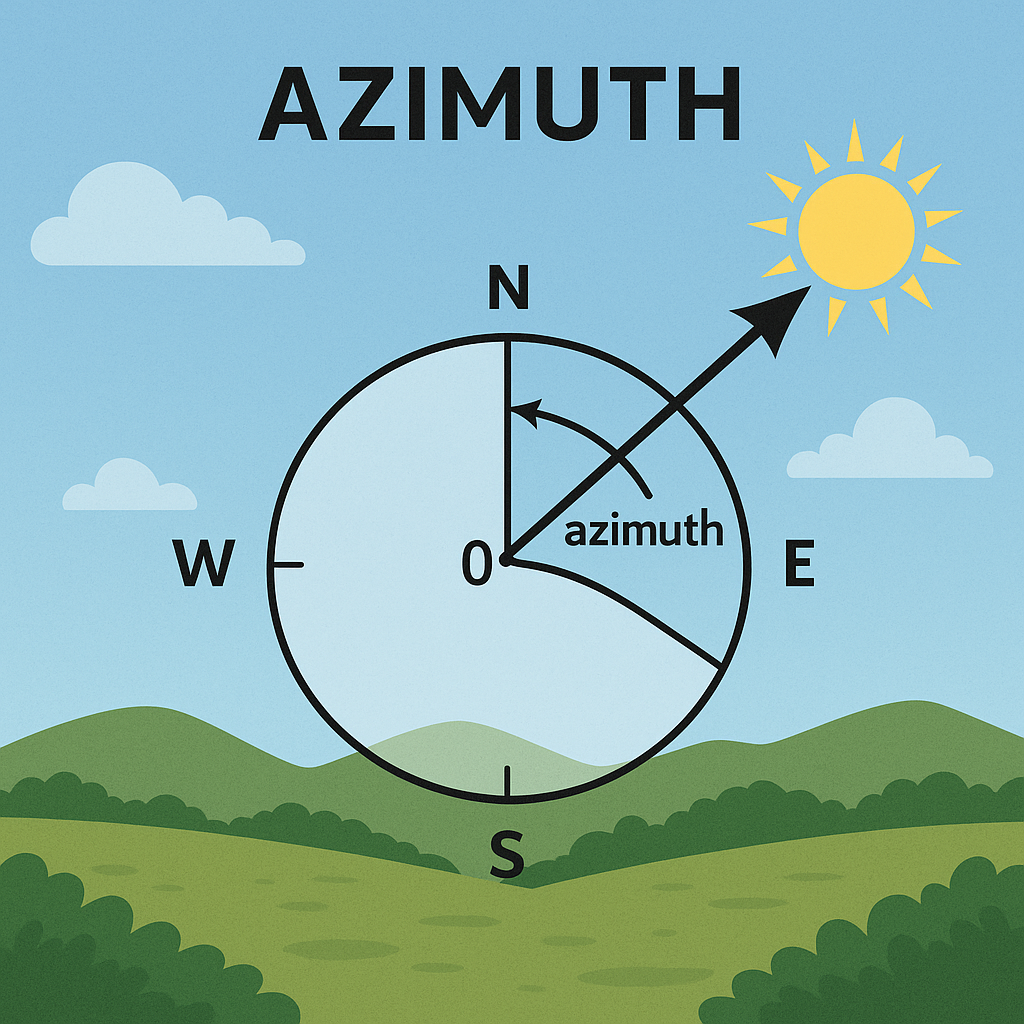
When examining landscapes, it is particularly crucial to comprehend direction. Certain terrain portions or slopes, such as those facing south or southwest, tend to receive more sunshine and dry out more quickly in wildfire-prone locations. Determining their azimuth aids in prioritizing where to remove vegetation or conduct closer monitoring because these places are more likely to catch fire.

Drone photography and remote sensing also make use of azimuth. The direction of the sun and the sensor have an impact on how vegetation appears in photos taken by drones or satellites. Inaccurate evaluations of fire risk could result from vegetation that appears healthier or drier than it actually is when azimuth is ignored.

Fire protection teams can produce more precise maps of arid, fire-prone regions by integrating azimuth with vegetation indices and temperature data. In the end, this lowers the risk of wildfires before they occur by assisting them in making more informed judgments about where to act.

To put it briefly, azimuth is a critical measure needed for creating accurate ground truth data needed to train wildfire risk models.
Eco Flare: Ready for takeoff

This is the second post in my series about Eco Flare, a wildfire-detection drone I’m working on to help detect hotspots before fire starts. If you haven’t read the first post yet, you can check it out here.

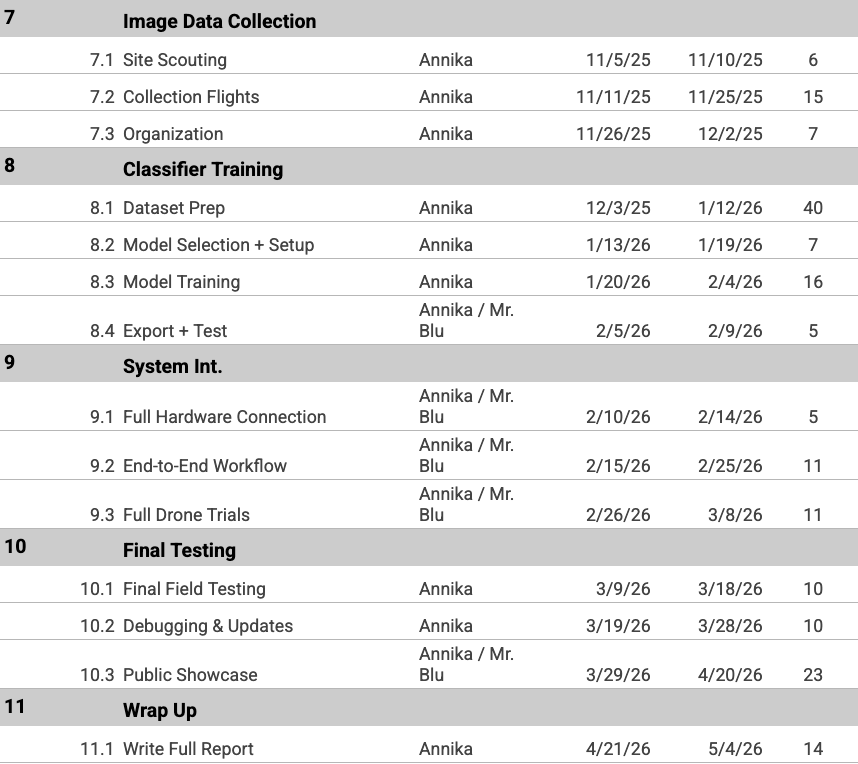
This week, I focused on getting organized. There are a lot of work components to this project—research, fundraising, building the drone, testing the AI—so I decided to map everything out in a Gantt Chart. It breaks down each phase of the project and gives me a better sense of what needs to happen and when.

Snapshot of the Gantt Chart for Eco Flare

The timeline includes everything from early research and technical planning to drone assembly, data collection, classifier training, and final testing. I also set aside time for trial flights, debugging, and a public showcase. I’m aiming to finish the project by July 2026 factoring in delays and extra work time. It’s a long timeline, but I want to make sure it works how it’s supposed to.

Having a full plan laid out makes the project feel a lot more manageable. There’s a long road ahead, but it finally feels like things are moving forward.

Stay tuned for more project updates!

Eco Flare: A drone to prevent wildfires

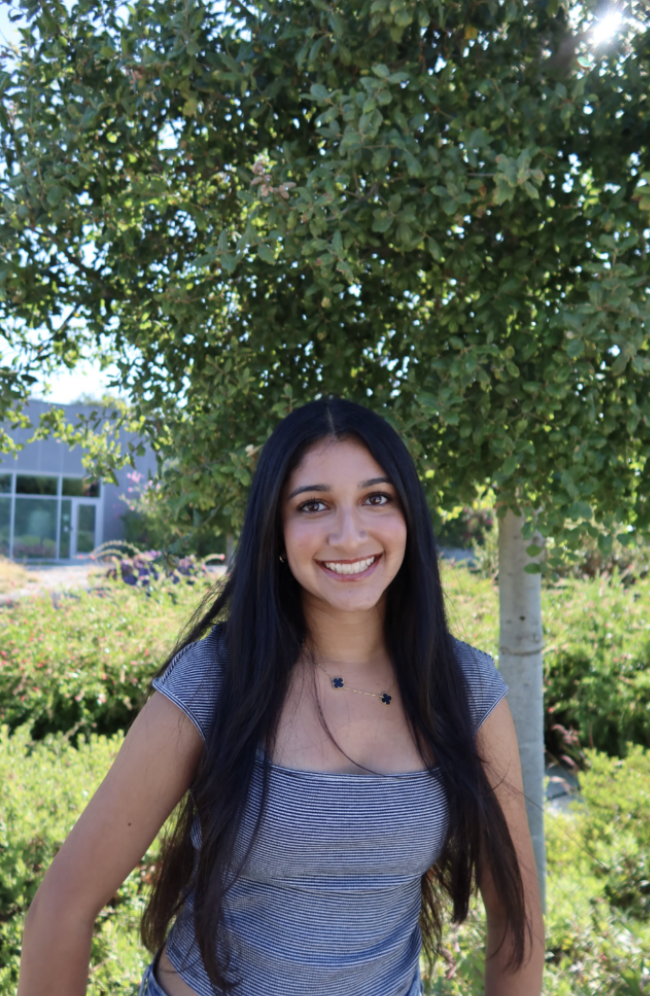
Hey! I’m Annika Jain, an incoming junior in high school, and I’m working on building a drone that could help stop wildfires before they even begin.

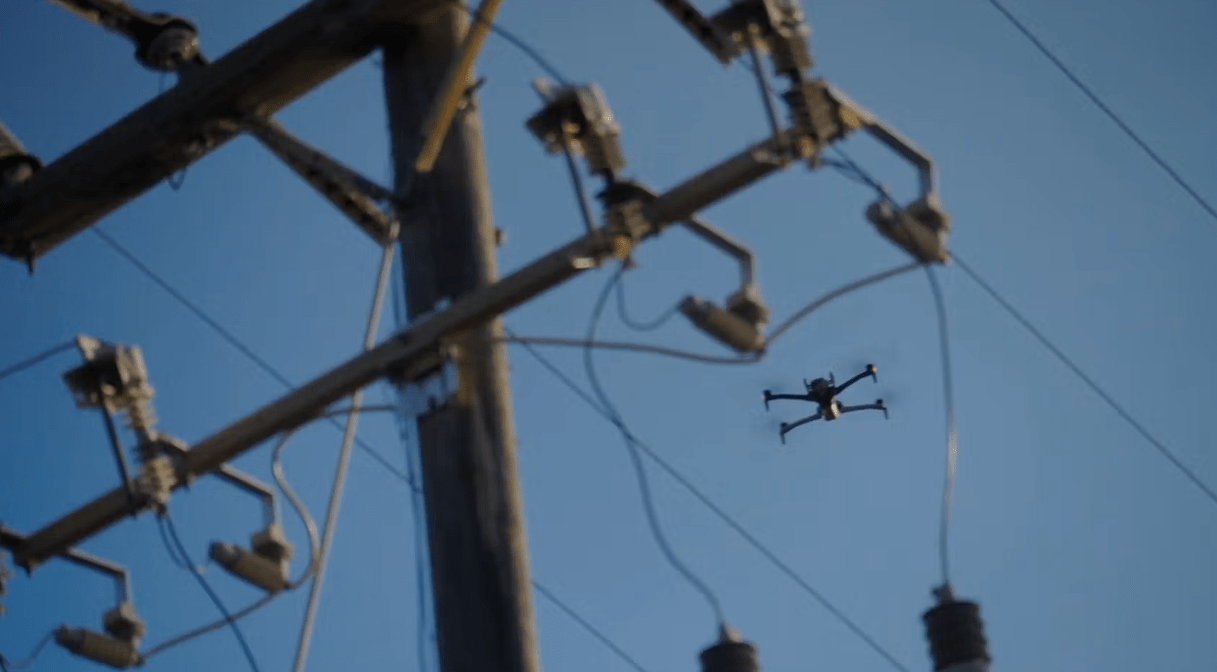
It’s called Eco Flare, a compact, smart drone designed to fly over forested areas, scan for trees growing too close to power lines, and send alerts before sparks fly (literally). It uses thermal sensors and image processing to detect wildfire risks, in fact, way before they turn into emergencies.

I started this project because I’ve seen how common and devastating wildfires are, especially in California. A lot of them could be prevented with better detection, so I decided to build something that could actually help.

Over the course of a year, I’ll be documenting how I design, program, and test Eco Flare—from wiring sensors, capturing data, to training an AI model to spot flag hotspots. It’s a big challenge, but I’m excited to share the process and show what students can do when we combine tech with purpose.

Table of Contents

  1. Eco Flare: A Drone to Stop Wildfires Before They Start (this post)
  2. Eco Flare: Ready for takeoff
  3. Eco Flare: What is Azimuth?

The Backstory of Major Insights: Why I Started This Podcast

Major Insights has been a long time coming.

The idea originally started around 1.5 years ago when I was trying to think of a project that I could make real impact in.

Nearly everyone, though, shared one thing: stress. Some were overwhelmed by the pressure of choosing the “right” major or trying to figure out what career actually matched their interests. Others were worried about performing well enough in high school to even get into a good college, let alone succeed once they got there. The future felt like this huge, looming thing and no one really knew how to approach it. That’s when I realized this was a real problem and I wanted to do something about it.

So, I being interviewing a few people, college students, professionals, and even fellow high schoolers. I formed a small team to help out, and while finding a meaningful problem and acting upon it was exciting, reality set in: we are high schoolers, and coordinating schedule is hard. Between school, extracurriculars, and just life, getting everyone together for full production cycles—including planning, recording, editing, and publishing a single episode—wasn’t realistic.

That’s when I recalibrated the format of the whole podcast.

Episodes originally ran around 45 minutes, deep dives that felt polished, but were hard to produce and even harder for busy students to keep up with. So I trimmed them to 15 minutes: short, focused, and perfect for a scroll break or walk to class. That shift made the podcast feel more intentional, less about big stories, more about sharing real insight that fits into the chaos of teen life.


Production is still a whole process, though and it takes real time and energy. So I’ve started exploring creative ways to streamline some episodes. One experiment I’m excited about? Turning PDF guides into podcast episodes using text-to-voice tools. It’s a way to blend my curiosity for tech with the mission of making helpful content.


Major Insights is constantly evolving. But at its core, it’s always been about giving high school students a place to feel a little less alone in the stress of choosing a path. I’m so excited to share what’s coming next!

Let’s figure it out together!

Major Insights: Your go-to podcast for expert career advice

Hi! My name is Akshara Patnaik, and I’m an incoming junior in high school. Like a lot of students my age, I’ve felt a lot of pressure to have everything figured out: college, career, and what I want to do with my life, especially with college applications getting super competitive.

That’s why I am starting Major Insights, a podcast where I will talk to industry professionals about their journeys in being successful. I want to learn what figuring it out actually looks like, and share that with other students like me, so we can learn together.

Along the way, we’ll dive into how AI is changing the job market, the career options we don’t usually hear about in school, and how we can navigate all the pressure without burning out.

This year, I will be sharing podcast episodes, behind-the-scenes updates, and tools I am building, like an AI-powered PDF to audio technology to revolutionize podcasting.

I hope Major Insights brings you a little more clarity or at least a reminder that it’s totally okay not to have all the answers yet.

Table of Contents

  1. Major Insights: So anyone can find their future path (this post)

Let’s figure it out together!

The Intersection of AI and Climate Action, and what it means for high-school students

Artificial Intelligence (AI) is permeating every aspect of modern life and its potential to solve some of the world’s most pressing issues has never been more evident. At Code Hobbits, we believe in harnessing this potential by introducing middle and high school students to AI through hands-on projects, specifically projects related to Agriculture, Sustainability, and Climate Action. For example, Aidan, one of our high-school students, is building the Blubot, a robot designed for plant care automation. This approach not only equips students with future-ready skills but also instills a deep sense of purpose and urgency toward environmental stewardship.

Studying AI through environmental applications offers other benefits as well. It encourages students to apply critical thinking and problem-solving skills in a real-world context, fostering a proactive attitude towards global challenges. Many students continue to develop their class projects to the point where these projects become central to their college applications. In addition to demonstrating a deep understanding of coding, AI, and math, in a college application, these projects showcase a student’s ability to overcome technical, social, and market-driven obstacles. Most of all, these projects demonstrate how technology can be a force for good, aligning student’s values and aspirations for a sustainable future.

Looking ahead, educating students at the intersection of AI and climate action is more than an academic endeavor; it’s a commitment to nurturing informed, capable, and compassionate individuals who are ready to lead the charge toward a more sustainable world. We invite students, parents, and educators to join us in this vital mission, empowering the next generation to harness the power of AI for the greater good of the planet.

AI copilots are changing how coding is taught

Artificial Intelligence (AI) is dramatically reshaping the world of software development. Traditionally, coding has been a meticulous process involving syntax and logic mastery. However, the advent of AI-powered coding tools like GitHub Copilot, Amazon CodeWhisperer, and Tabnine is changing this landscape.

While AI tools are becoming more autonomous, they still require human oversight. Students need to learn to review AI-generated code to ensure correctness and compatibility. AI Copilots have shifted the focus from syntax mastery to problem-solving skills. Students no longer need to memorize intricate syntax rules, as AI-powered tools handle much of the syntax correction and code suggestions. As our cofounder, Mr. Blu, likes to say, “Languages have 3 skills associated with them – 1) reading, 2) writing, and 3) speaking, and reading is now a more important skill than writing.

for programming languages, reading is now a more important skill than writing.

At Code Hobbits, we are fully embracing this new technology by integrating AI copilots into the curriculum to accelerate learning and allow students to focus more on understanding programming concepts and solving problems.

What should the kids be learning in the AI age?

Ever since the Large Language Models became popular, I’ve witnessed a massive uptick in education anxiety and career prospects. Parents are emailing me every week asking what their kids should learn that will still be relevant and economically viable when they join the workforce.

Here’s what some of the top minds in the industry have to say:

  • Jensen Huang: domain expertise, diverse skillsets, lifelong learning, how to prompt
  • Sam Altman: creativity, critical thinking, resilience, high rate of learning, adaptability, familiarity with the tools
  • Scott Galloway: storytelling
  • Andrew Ng: to be AI-coding literate so they can thrive in an increasingly AI-powered world

My answer remains the same as it always has been:

Curiosity, ability to create/build/make __X__, and storytelling have been and will remain some of the most in-demand skills.

Silicon Valley’s Code Hobbits visits Makeblock to learn how to build tech products

Repost from https://www.makeblock.com/blogs/ideas/silicon-valley-s-code-hobbits-visit-makeblock-to-learn-how-to-build-tech-products

“My first trip to Shenzhen was incredible. My first visit to Makeblock was amazing and a great experience. When I went there, I got to check out all of the cool products at coding robot company Makeblock and even got to build my own robot. That was the most fun in my opinion. Then I got my age perfectly guessed by a robot, which was super cool. Then we had to leave, and I ended up finishing my robot, using it in my picture! Makeblock was extraordinary, and I am happy to be privileged to have went there” – Ariv G. (Student)

Founded by Mayank Malik, a Silicon Valley industry veteran, in 2010, Code Hobbits has distinguished itself with transformative teaching and learning programs for children and teenagers. By combining coding, art, science, engineering, and entrepreneurship and working with incredibly talented engineers, musicians, artists, and educators, they help students invent, rethink, and create.

Core to their teaching is software and hardware products that align with their education philosophy and values. One such product is the mBot, coding robot company Makeblock’s entry-level robot for students who want to program electronics using Arduino, an electrical engineering prototyping platform. To date, the organization has reached over a thousand located in and around Silicon Valley.

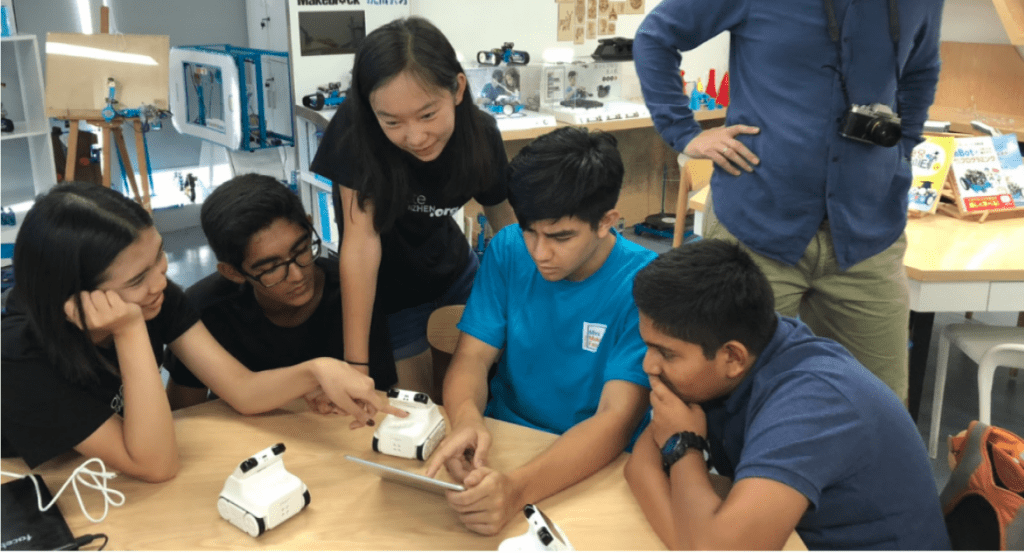
During the visit to Makeblock’s Shenzhen headquarters, we introduced the students to our full range of hardware and software products, including mBot, our DIY platform, Makeblock Neuron, Codey Rocky, and their combined capabilitie.

“During the Shenzhen bootcamp I got the opportunity to go to coding robot company Makeblock HQ, a robotics education company. They hosted us in a room full of robots, which is a room that can only be described as paradise for robot lovers. They had incredible products in there — from robots to go karts, from 3D printers to programmable dogs, you could make anything you imagine. My personal favorite was the drone. The drone was completely modular with the body made of styrofoam and magnets. You could take the drone apart and reshape it into cool new shapes. One of the members of the Makeblock team took apart the drone and turned it into a hover car by rearranging where the propellers were facing. I thought that was super cool. I would like to thank Makeblock for showing us around their headquarters and to Code Hobbits for creating this opportunity for us. I had the time of my life.” – Kintien W. (Student)

Over the past few years Code Hobbits students have produced proof of concepts for products including smart backpacks with built-in GPS, programmable light-painting gloves, motion-tracking watches, internet-connected LED-enabled umbrellas, and headphones that convert sound to light. At Makeblock, we delight in seeing the natural creativity of young people enabled by educators such as Code Hobbits and initiatives like Innovate Shenzhen, and look forward to building more bridges between the Silicon Valley in the Bay Area and our own here in Shenzhen.