There is no one-size-fits-all when it comes to how students comprehend information. Everyone is different, and to be successful in the classroom, they must understand which of the learning styles – visual, auditory, kinesthetic, social, solitary, and/or verbal fits their learning.
Most of us predominantly depend on one of our senses to process the information available around us. Understanding which learning style catalyzes information acquisition and retention will help you learn faster.
In the learning process, you might find that you prefer different ways to understand and process information in your mind. You may be already aware; you retain more information when you watch a video or listen to a podcast, or when you build something with your hands.
We use a combination of learning styles to teach kids complex concepts and develop their interest
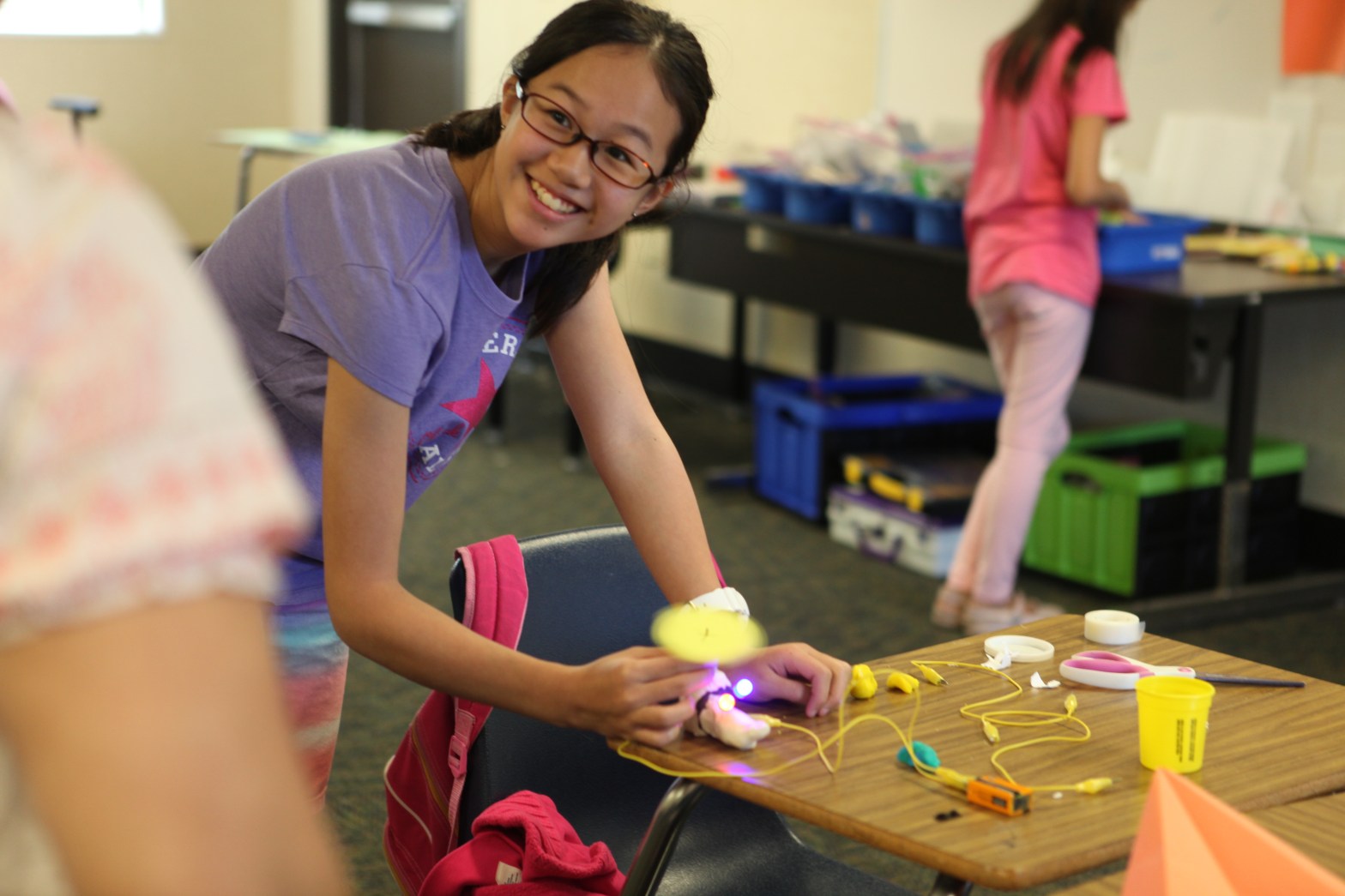
For instance, in our Mobile Game Development class (Grade 6 and above) and Tinker Studio class (Grade 4 and 5), there are a fair bit of Newtonian Physics concepts that need to be understood by students. Our deeply trained curriculum experts have developed lesson plans that convey these concepts with each learning style in mind. Let’s take a look at an example.
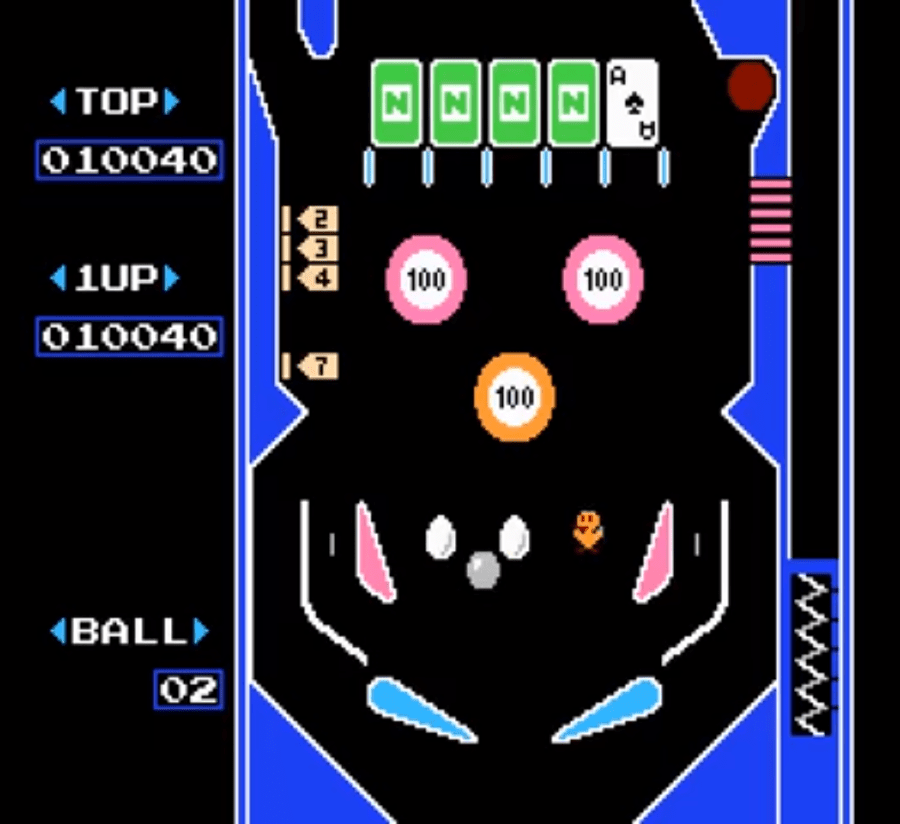
One of the projects in the Mobile Game Development class is to develop a mobile pinball game. The ball is launched with a spring-based trigger, it bounces around and makes things move, eventually, gravity wins and brings the ball down, and the player has two paddles to kick the ball up again if they can. Of course, this is a mobile game, so there is no real ball, no spring-based trigger, nothing to bounce from, no paddles, and most certainly no gravity.
For the game to look and feel realistic though, each of these things — ball, paddle, spring, gravity — needs to be coded in a way that mimics how they work in the real world. How do we do that? We simulate Newtonian physics, also called Newtonian or classical mechanics, directly into our game environment.
In middle schools around the world, Newtonian Physics is taught as a set of equations – and that is B-O-R-I-N-G. We teach our students fundamental concepts and let them program these into their pinball games. From that point on, they can tweak the code to make modifications until the game ‘feels’ right. This process of trial and error allows our students to develop an intuitive feel for how equations model the real world. They don’t feel the need to cram an equation that they don’t understand. The motivation behind learning is not to pass an exam, it’s to build an epic game!
There are other things that you can do in a game environment that are impossible to ‘play with’ in a real-world classroom. Can you reverse gravity in your school’s physics lab? In your pinball game, you can!
During COVID, Anish found himself being interrupted by his family while he was in a zoom class. To minimize unintentional disruptions, he developed a smart door sign that integrated with his school calendar and displayed if he was in a class and if so, which class he was taking.
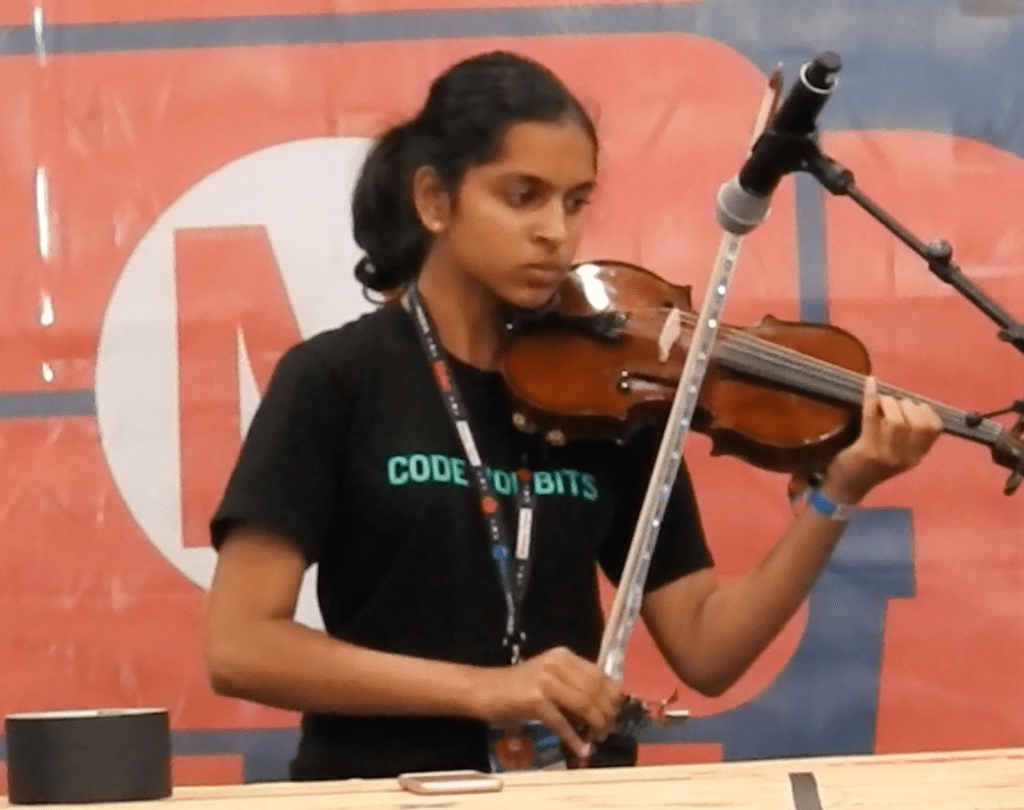
Vandana Chari, a Rising Stars student, wins Code Girls International Video Competition for her product Spectune! Spectune is a high-tech programmable LED violin bow that creates visual feedback for the musician, making it easier for them to emphasize certain notes and soften others, thereby making the piece more enjoyable. Vandana holds a provisional patent for Spectune.
Many of our students have developed their own programmable gadgets from concept to prototype. To my delight, a few have set an ambitious goal of taking their products to the commercial market. To help them experience the startup culture, maker movement, and introduce them to manufacturing, I traveled with them to China’s Pearl River Delta. This experience was designed from the ground up for them to better prepare for the next steps of product development so that they can make their ideas a reality and get them to market.
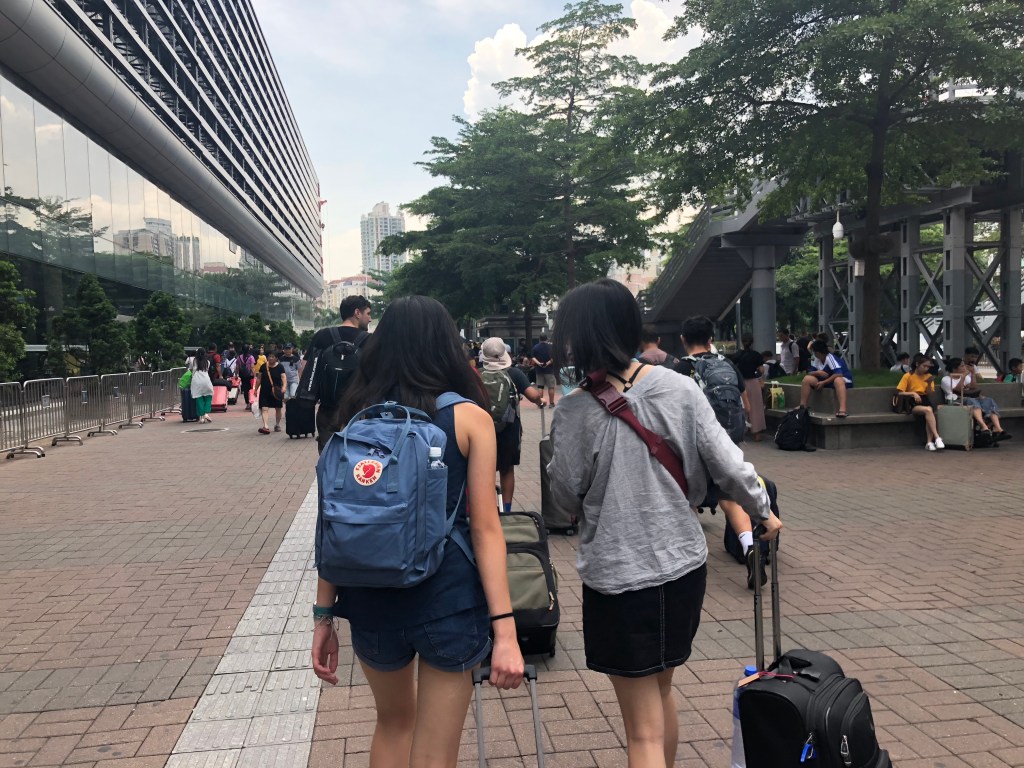
The group arrived to Shenzhen and spent the first day acclimating to Chinese culture, food, and weather. We traveled to Coco Park in Futian District, Shenzhen where we stayed in the Hotel Somerset. Our location was central to many of the sites we visited and allowed us to regroup each morning and evening after long days of exploration and presentations.
Student group arriving in Shenzhen
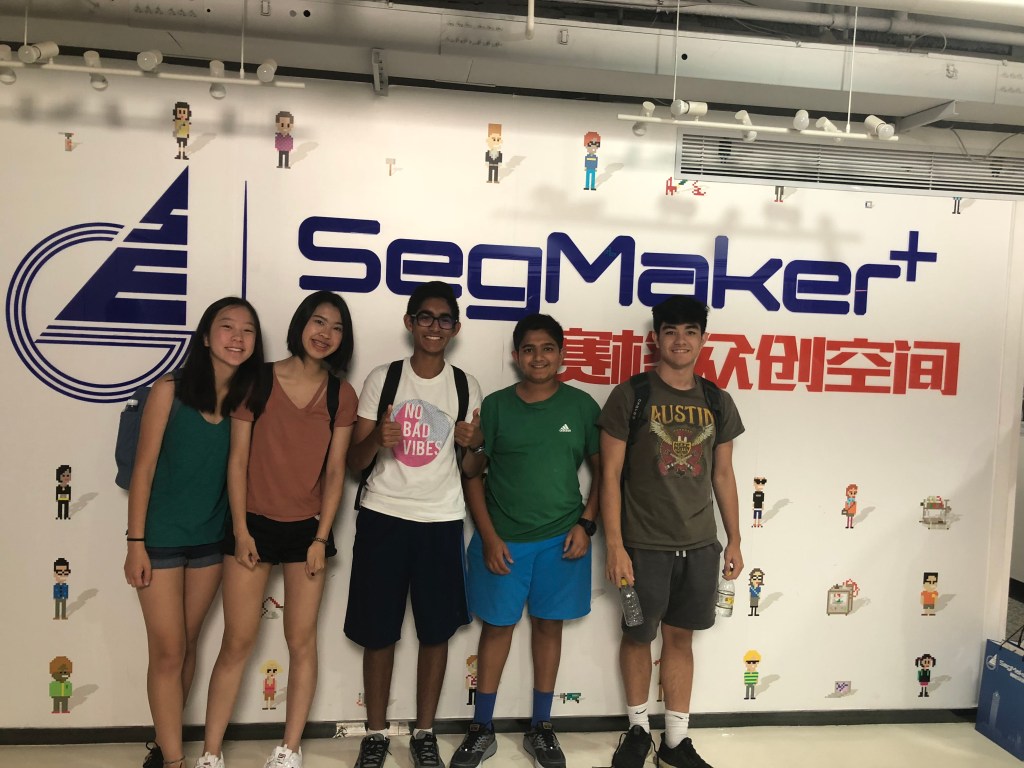
On Monday, the group attended presentations at SEG Maker, a maker space located in the largest building in HuaQiangBei, the electronics market in Shenzhen. The presentation focused on why Shenzhen has grown to be the hub that it is today, as well as an overview on the entire lifecycle of product development.
Students at Seg Makerspace Lobby
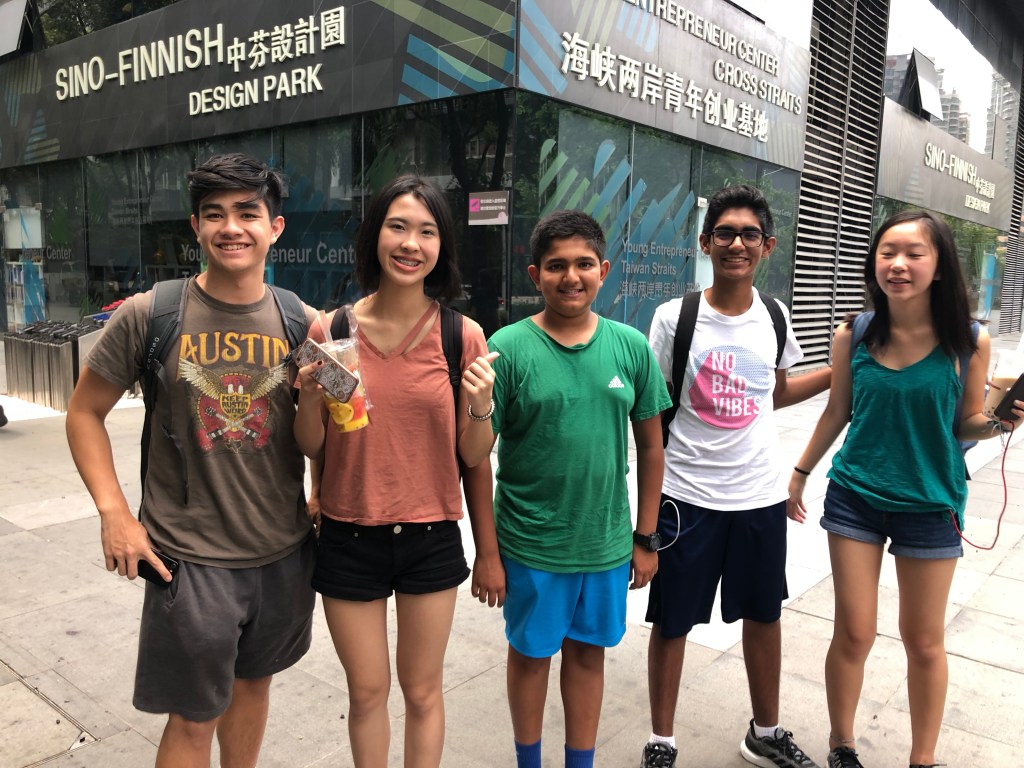
We then visited the Sino-Finnish design park and the Shenzhen Open Innovation Lab to learn more about the industrial design process and how products can be designed in Shenzhen in collaboration with factories to ensure that you design will work with manufacturing processes.
Students outside Sino-Finnish Design Park
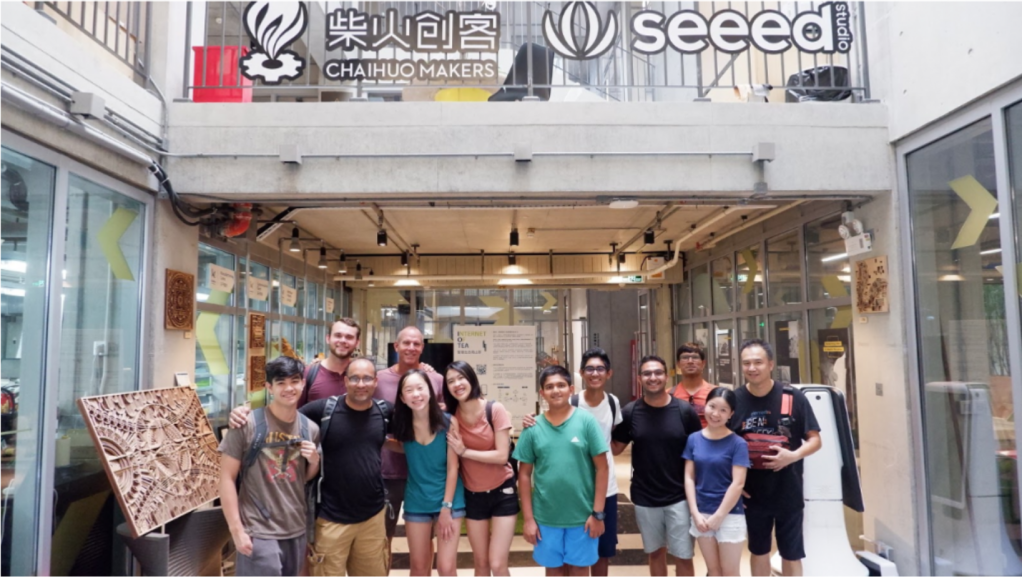
We finished the day with a visit to Seeed Studios, an IOT and rapid development focused tech incubator in Shenzhen. We toured through xFactory, their onsite development and fabrication laboratory and learned more about what incubators and accelerators can do to help get a product off the ground and to market quickly.
Code Hobbits team at Seeed StudioStudents receive kits to make their own 4K camera
On Tuesday, the group traveled back to HuaQiangBei to visit TroubleMaker, a maker space and incubator located in the sourcing hub of Shenzhen. At TroubleMaker we were given a presentation on the importance of sourcing your parts and materials efficiently, things to look out for when choosing a factory to do business with, and important information on how to be successful establishing and maintaining business relationships in China.
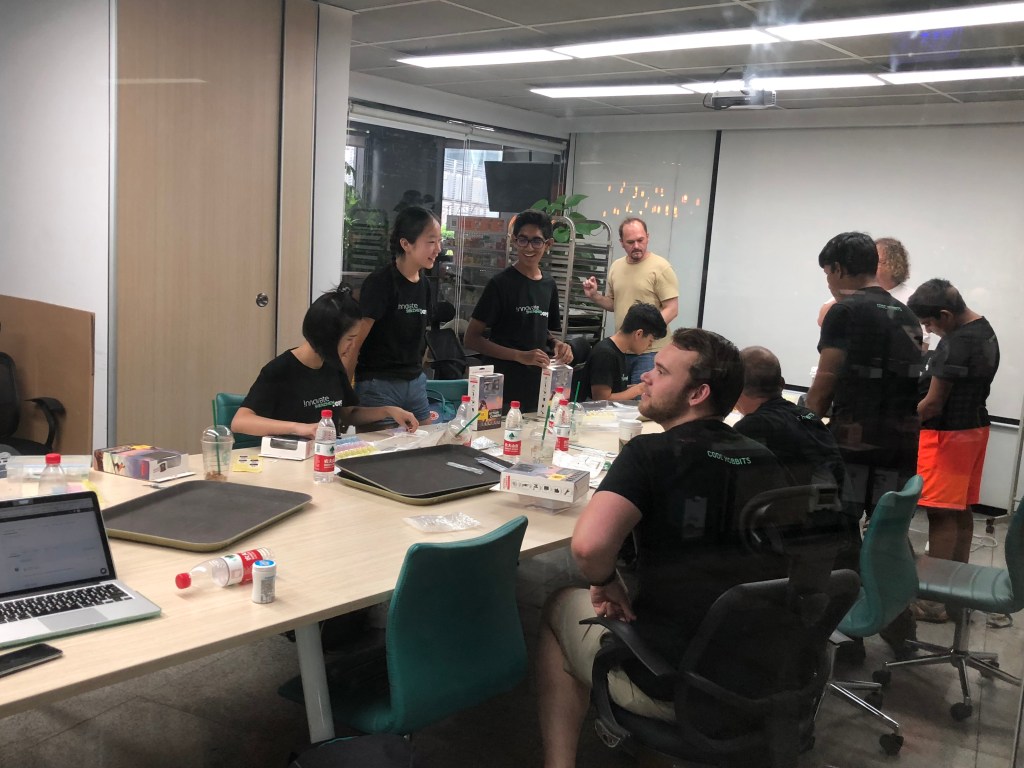
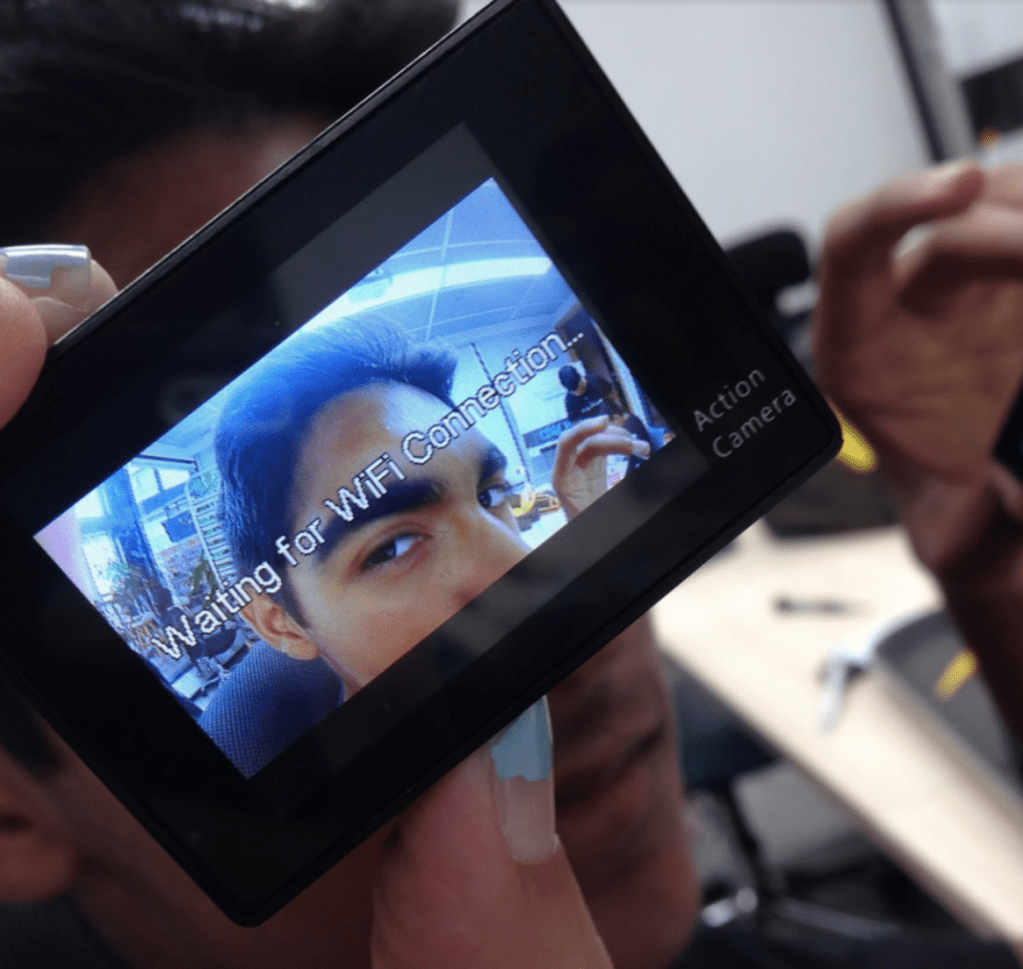
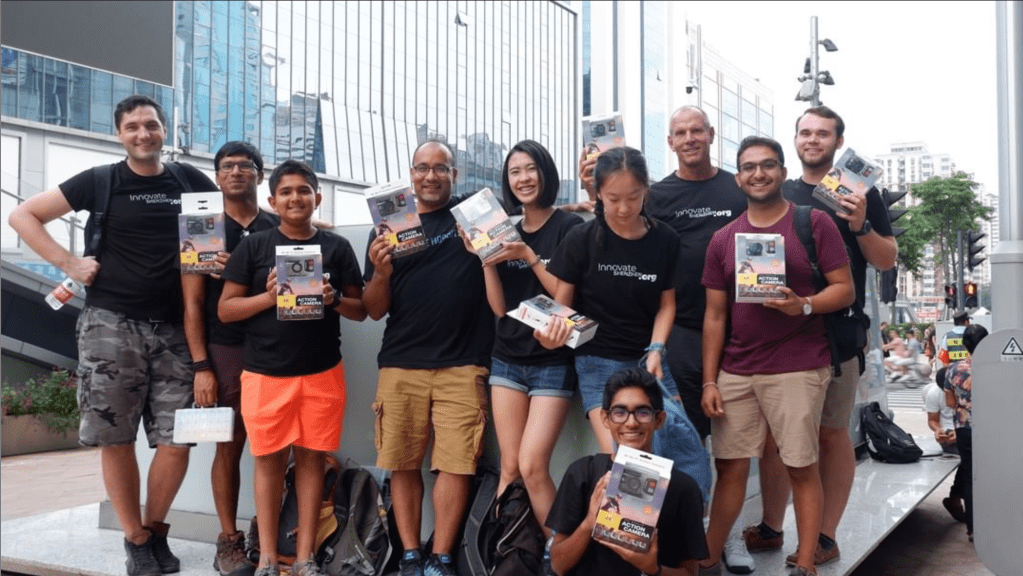
We were then given all of the pre-sourced materials to assemble our own 4K Action Sports Cameras. We went through the activity pretending that we were assembling these cameras for commercial sale in order to better understand the complexity of design for manufacturing and the precision required to create the commercial electronics we use everyday.
Workshop: Building a 4K cameraStudents playing with their brand-new-off-the-soldering-station 4K cameraThe entire Code Hobbits crew with their brand new cameras
Finally, with our camera’s built, we were given the challenge of finding an SD card to use inside the camera by searching through the market and bargaining for the best price we could find. In HuaQiangBei, you must be wary of counterfeit electronics and drastic overpricing. The winner of the sourcing challenge was Ariv, who found his 64GB SD card, tested that it worked, and purchased it for 25 RMB or $3.68 USD.
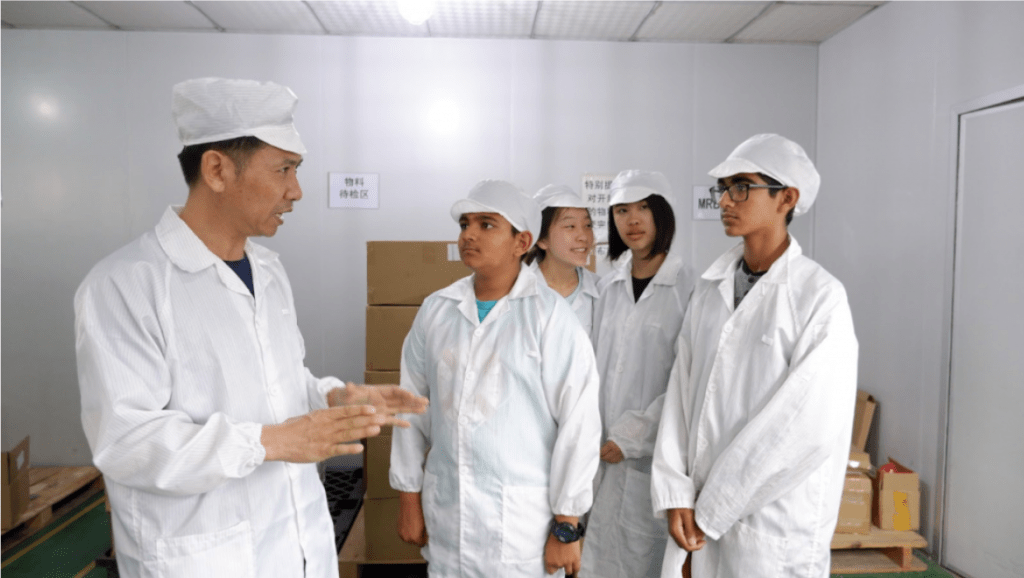
On Wednesday and Thursday, students focused mostly on DFM, or Design for Manufacturing, skills. We were taught what thinking and design must be done before you send a product, model, or design drawing to a factory to make sure that it will be feasible to manufacture. Wednesday was focused entirely on electronics design such as PCBA, or printed circuit boards, while Thursday was devoted to the mechanical side of things including housings and enclosures for the PCBAs.
Students visiting a PCBA Factory
Thursday’s visit taught us more about the mechanical design side with tours of machine shops, injection molding facilities, and prototyping workshops. We got to see the process of creating steel molds and then saw them in use for the rapid production of plastic parts using the injection molding process and ABS plastics. This information will help students to better understand what is feasible to manufacture and what is not.
Students visiting a machine shop in Shenzhen
Friday was our company visit day where we got to visit and tour three major companies based in Shenzhen. We listened to why they believe Shenzhen to be a beneficial location to start a company in the heart of hardware manufacturing. We also learned about options available for venture capital for Shenzhen based companies.
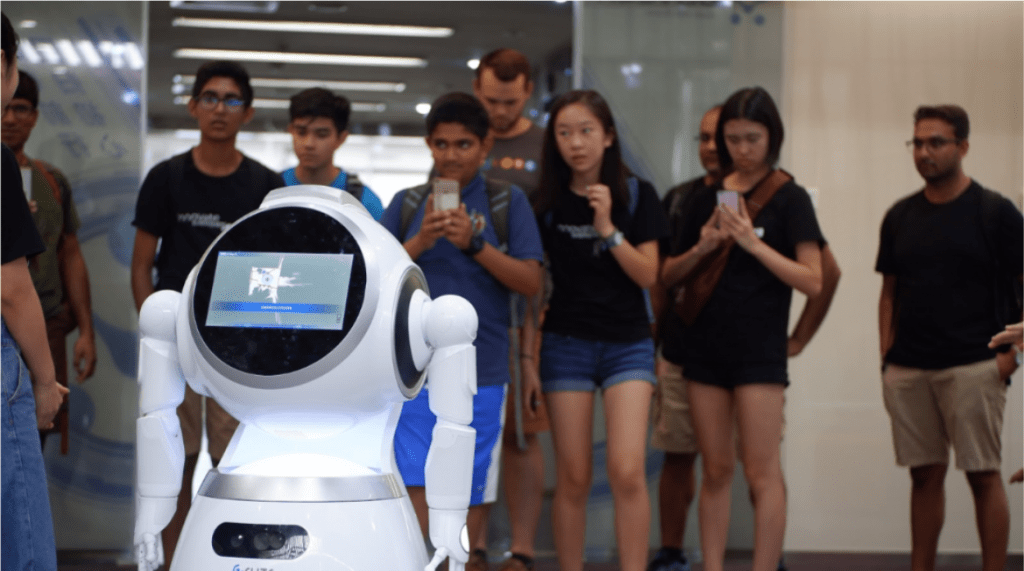
Our first company visit was to UBTech Robotics, a robotics company that makes robots for a wide variety of uses such as search and rescue, fire fighting, education, and visitor greeting and reception. We viewed demos of several of their robots and were able to test out some of their educational models.
Students at the UB Tech LobbyUB Tech staff showcasing their humanoid robotics products
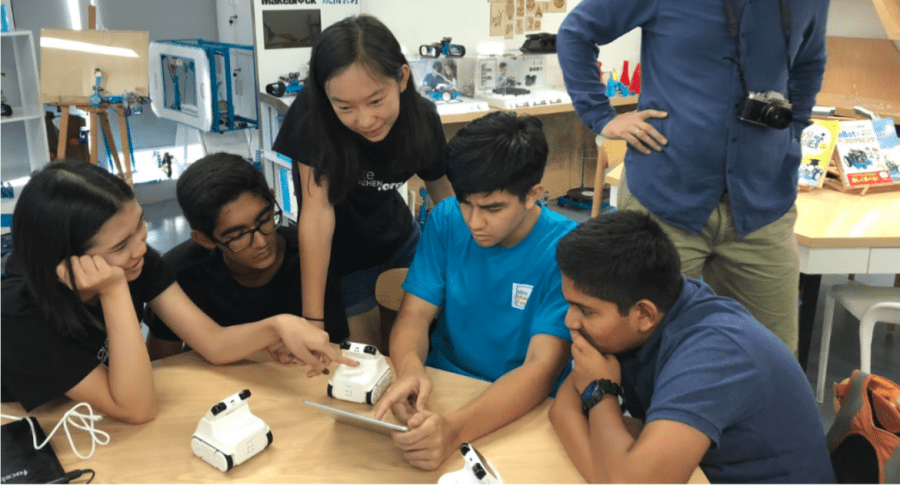
At Makeblock Robotics, we had the opportunity to demo several of their products, learn about the history of the company, and even build a few of their educational models in a race among teams. Makeblock was very excited to have us in attendance and we enjoyed our time their with them.
Students playing with Makerblock products at their headquaters in Shenzhen
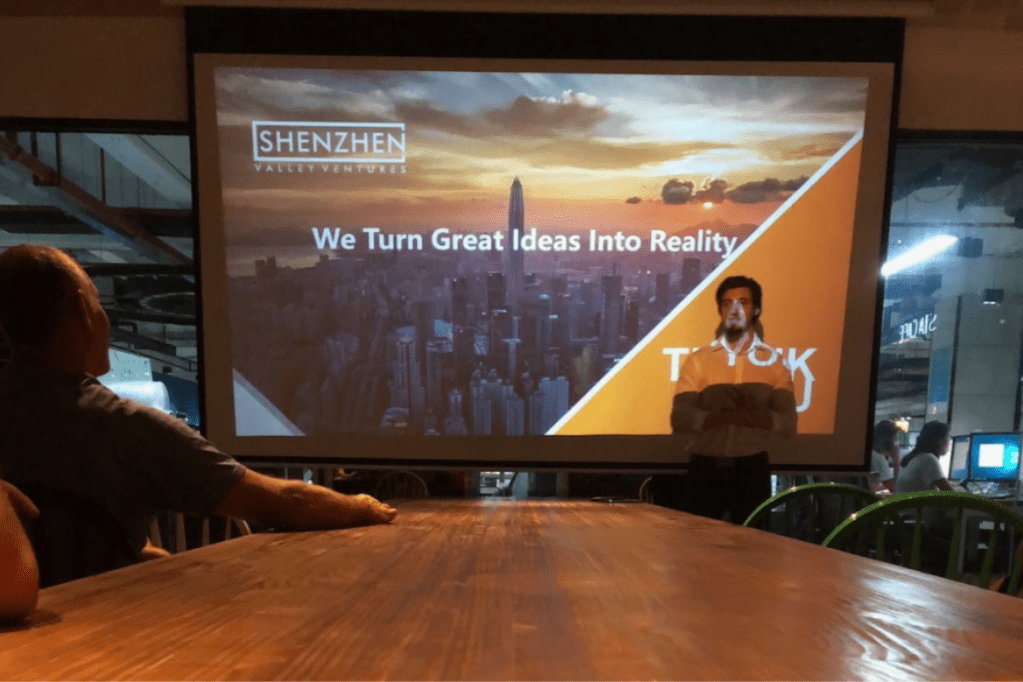
Our final visit was to Shenzhen Valley Ventures where we learned more about the accelerator process, as well as the available venture capital options for Chinese companies. At SVV we also learned more about the certification process for electronics in the in-house electronics pre-certification lab at SVV. This visit was incredibly informative and helped us to better understand everything that goes into getting a product to market.
Presentation at Shenzhen Valley Ventures
We finished our final day with a traditional Hot Pot dinner at Coco Park, the shopping area near our hotel. We celebrated a successful and jam-packed bootcamp and enjoyed the delicious food before getting ready to head back to the United States.
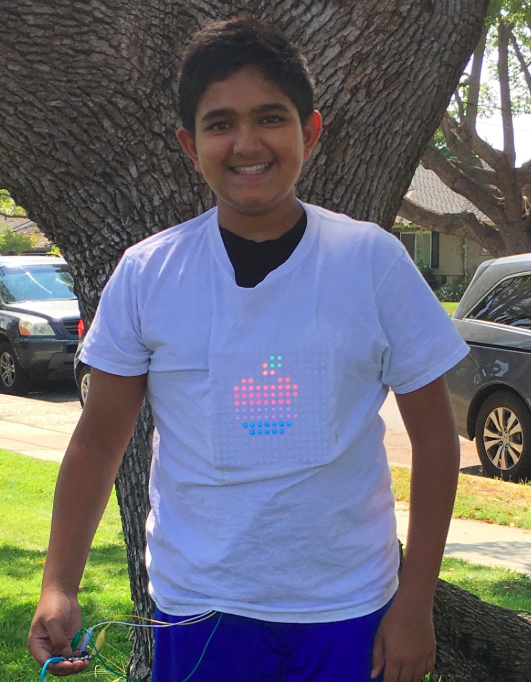
Rising Stars student Ariv Gupta (8th grade) developed Project:Shine, a smart, programmable t-shirt for kids. Below is the excerpt of his interview about how he plans to bring his product to market.
Jack: Why did you decide to go to the Code Hobbits Expeditions Shenzhen program? Ariv: I decided to go to Shenzhen to learn about how things that we take for granted, for example, the iPhone, are made. The iPhone has wowed me for the entire time that I have been a user of it with its unique design and user-friendliness. That is the type of wow that I want my product to give you. My product is called the Project Shine, and it will revolutionize the way you look and let you choose what you want your wardrobe to look like. It is a Smart T-Shirt that contains a matrix of customizable lights that you can program to your liking. It shows logos, text, it is sound-reactive, and it can do much more. It inspires people to code and even solves the problem of looking through your wardrobe for clothes for special events. You will create your wardrobe. People will even follow your example, reposting their version of your creation. No more searching for the shirt that matches, you can make your shirt always match. This is my vision of my product, and I went to Shenzhen to fulfill this vision, to create a better T-Shirt for the world. I decided to go to learn about and experience this behind-the-scenes process of manufacturing myself so that I can make a better product for everyone’s use. Shenzhen has crossed various technological boundaries that the United States has not.
Jack: What did you do/see/experience in Shenzhen? Ariv: My first trip to Shenzhen was incredible. The first day that I got there, the Code Hobbits group went to go get Unicom sim cards for the week. We arrived at China Unicom (CU), and they told us that they can sell cards only on contract (postpaid). And they recommended we go out to a kiosk to buy prepaid cards, and they advised us to go to another shop. Then we went to the kiosk, and they sold us SIM cards, but then they took us to the same China Unicom branch for registering our identities. Then we had to go again to the kiosk store. And on the way there, the guy taking us told us that we actually did not need to go back. This is when I found out that “In China, what you think is easy will be complicated, but what you think is complicated will be easy.” Those words, from our guide, Nick, never failed to be true for the next seven days of my trip. On the first day of our bootcamp, we went to SEG Makerspace, where our guide gave us a presentation on why Shenzhen was the place to go for manufacturing, and then told us about the product life cycle. Then we went to SIDA, which was a non-profit design agency where we got to see a few cool products that were designed there. Then, we went to Seeed Studio, the IoT hardware enabler, and learned about what products they had. The next day, we went to Troublemaker Makerspace, where we became factory workers and assembled our very own 4k cameras. That day, we had the challenge to go source an SD card for the camera that we made at the Huaqiangbei market. I got a 64GB micro SD card for 25 RMB, which is 3.63 USD. Then came the factories. First, we went to a manufacturer that made PCBs, or printed circuit boards. There, we got to see wave soldering machines, which soldered all of the components to the board and learned all of the steps of the PCB manufacturing process. Also, we went to an injection molding facility that made molds for many different products. We also got to see a whole plastic cutting process where one machine cut a block of plastic down to a smooth and sleek product part. We saw many cool technological products in the city. I got to see a cup that supercools hot water quite fast. I got to see a fan that when it spun, it showed a cool image. I saw a full-color 3D printer and even a cat that talks to you! There were levitating globes and even robots. This brings me to my visit to UBTech Robotics. There, we saw dancing robots and even a robot that can pick itself back up if it falls. After that, we went to Makeblock. When I went there, I got to check out all of the cool products at Makeblock and even got to build my own robot. Then I got my age perfectly guessed by a robot, which was super cool. Then we had to leave, and I ended up finishing my robot, using it in my picture! After that, the last day came, and I spent that whole last day shopping at Huaqiangbei! We filled up two suitcases of what we bought and I still was not satisfied. My trip to China was extraordinary, and I was privileged to have gone there.
Jack: How was it different than what you expected? What did you learn that you did not know before? Ariv: Shenzhen was totally different than I expected. I never thought that it would look even close to San Francisco, as it has many extravagant buildings. You look one way and see something good, and you look away, and you see a beat up shop. But it looked even better than San Francisco! Shenzhen was busier than San Francisco though. The metro stations were so busy, when I was coming down the escalator to the station, I could see a city of heads under me. There was a lot of greenery there that was to my surprise, well kept. When I was shown pictures of the city ten years ago compared to what it is like now, I was blown away. It used to be a fishing village, and in ten years, it was a huge city. That was crazy to imagine and it really showed me what China speed was. And to give a figure of what China speed is, in 2017, eleven skyscrapers were built in Shenzhen alone. That is more than any other city in China and the whole U.S.! Also, I saw some huge injection molding machines, the size of tiny houses. That was crazy to see. I also learned many things there. I learned that there are many steps that you have to take before your product comes out of the hatch for manufacturing. You have to get so many engineers to do the design and wire routing before you get a final product, and that was a big thing that I learned. I also never knew that you had to put rails on the circuit boards that you design so that it can go through manufacturing. And that you had to put tiny objects called fiducials on your board to show the machine where to place what component.
Jack: What are some of the opportunities you can pursue? Ariv: I’ll continue working on my product and use the new knowledge I have to launch my product to market.
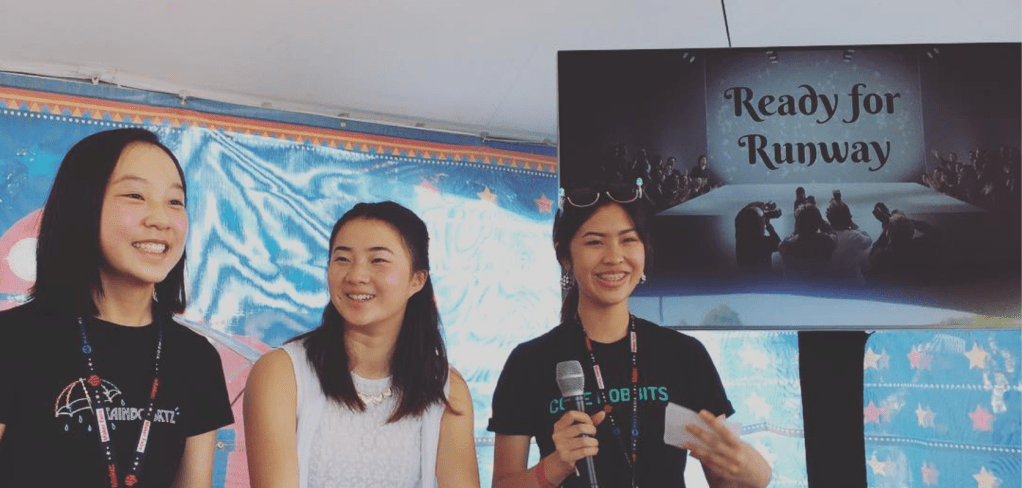
Alyssa Cho (11th grade), Jacquelyn Chim (9th grade), and Katy Lee (9th grade), present programmable clothing and accessories at the Bay Area Maker Faire.
Alyssa developed a motion-activated, light-up dress to take the fashion-tech world by storm. She was inspired to create her dress Flash-On from Claire Dane’s Met Galla dress.
Jacquelyn developed LED earrings that can match the color of your outfit or light up in one of the 10 pre-programmed light patterns.
Katy developed Rainbo Skyz, a hackable umbrella, one of the more photographed projects at the Young Maker gallery at the Maker Faire.
Shree Sathiyan (8th grade) and Vandana Chari (8th grade) are combining their interests in music and tech to create innovative products. Shree has created Lumix, fun-looking sound-reactive, light-up headphones, and Vandana has created Spectune, a sound reactive violin bow to assist beginner violin players. Lumix and Spectune bring music to the ears as well as the eyes!









 Code Hobbits